Grocery stores may seem like ordinary places, but accidents can happen quickly when floors are wet, aisles are crowded, products fall, or hazards are not addressed. Shoppers often focus on finding items, comparing prices, reading labels, or pushing carts through narrow spaces. Because of this, they may not immediately notice spilled liquids, loose floor mats, uneven surfaces, or obstacles in walkways.
Grocery store accident injuries may range from minor bruises to serious harm. A simple slip near the produce section or a fall in a crowded aisle may lead to sprains, fractures, back injuries, head trauma, or soft tissue damage. These incidents are especially concerning for older adults, children, and people with mobility challenges.
This topic connects closely with our article on Why Slip and Fall Accidents Are More Serious Than You Think, since many grocery store injuries begin with a sudden fall. Understanding where these risks appear and what shoppers can do may help reduce avoidable accidents.
Why Grocery Store Accidents Happen
Grocery stores are busy environments with constant movement. Employees stock shelves, customers push carts, delivery workers move products, and refrigerated sections may create moisture on nearby floors. When many people move through the same space, even a small hazard can become dangerous.
According to the Centers for Disease Control and Prevention, injuries are a major public health concern and may happen in many everyday settings. Grocery stores are one example of a public space where routine activities may turn risky when hazards are present.
Common Causes of Grocery Store Accidents
Several conditions may contribute to grocery store accidents. Some hazards are temporary, while others may exist because of poor maintenance, cluttered layouts, or lack of attention to safety.
Wet or Slippery Floors
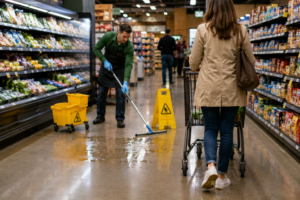
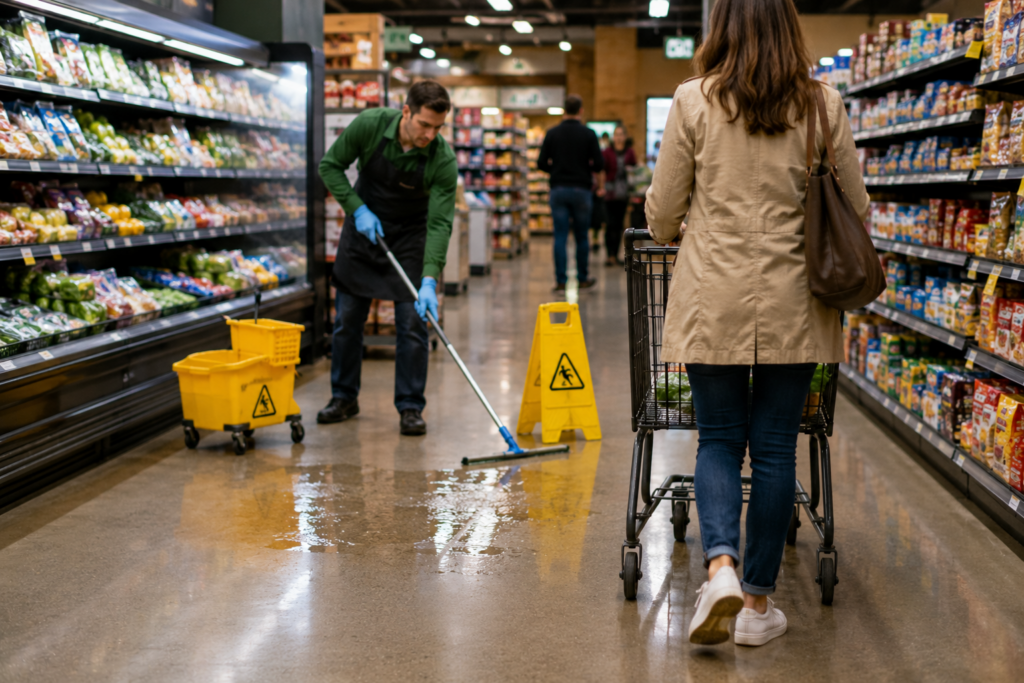
Spilled drinks, leaking refrigerators, melting ice, rainwater near entrances, and recently mopped areas may create slippery walking surfaces. If warning signs are missing or placed too far from the hazard, shoppers may not realize the floor is unsafe.
Fallen Products
Items may fall from shelves when products are stacked too high or placed near the edge. Cans, glass jars, and boxed goods may cause direct injuries or create tripping hazards in aisles.
Cluttered Aisles
Restocking carts, boxes, displays, and misplaced shopping baskets may block walking paths. When aisles are narrow, shoppers may have limited room to move around obstacles safely.
Uneven Flooring
Loose mats, cracked tiles, torn carpeting, or uneven transitions between flooring surfaces may cause trips and falls.
Parking Lot Hazards
Grocery store risks do not end inside the building. Parking lots may contain potholes, poor lighting, shopping carts, oil slicks, and pedestrian traffic near moving vehicles.
These risks are similar to the everyday injury concerns discussed in Top 7 Most Common Injuries and How to Protect Yourself, especially when it comes to sprains, fractures, and head injuries.
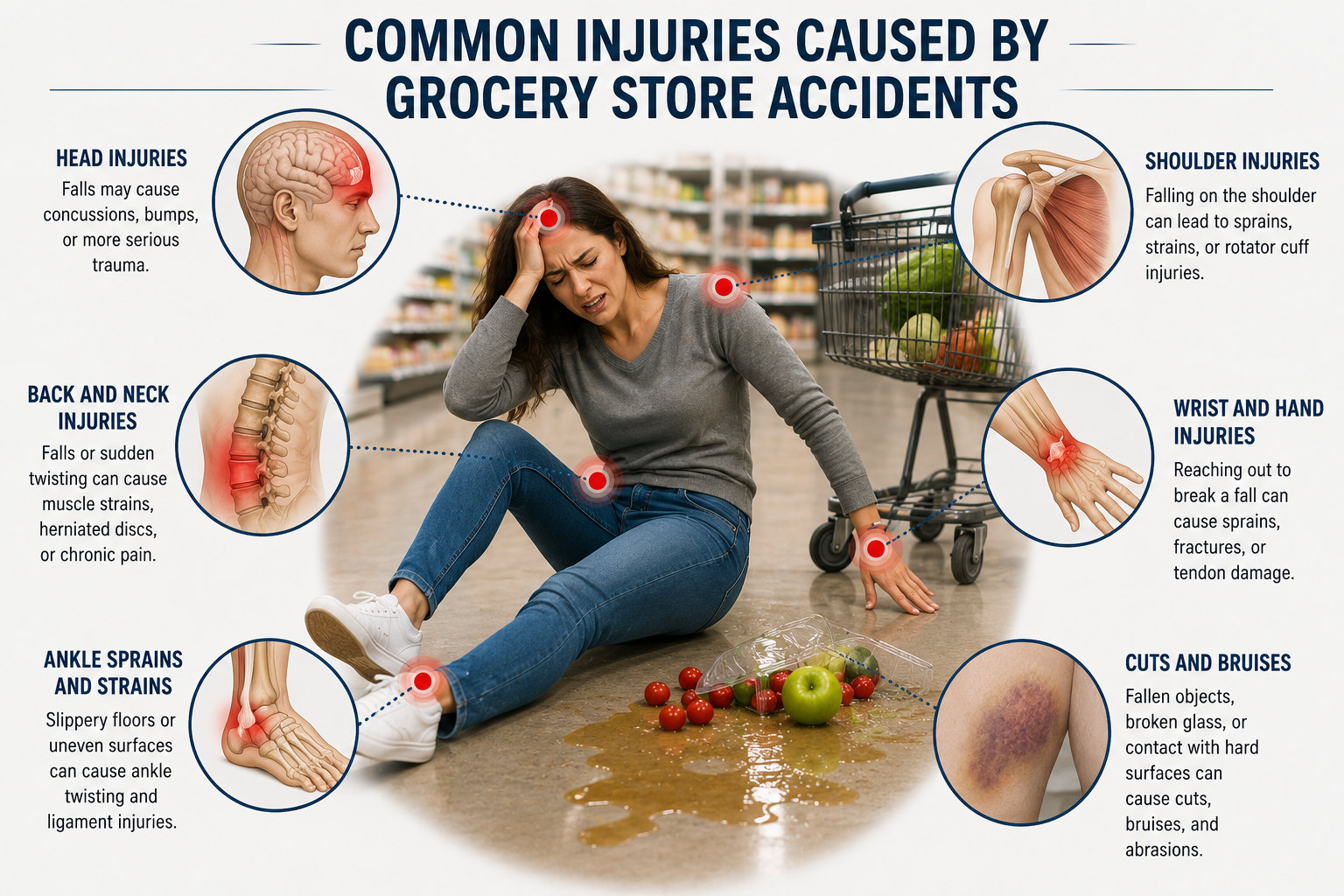
Common Injuries Caused by Grocery Store Accidents
Grocery store accidents may cause different injuries depending on the person, the hazard, and the force of impact. Some injuries appear immediately, while others become more noticeable hours or days later.
Sprains and Strains
A sudden slip or awkward step may stretch or tear ligaments, muscles, or tendons. Ankles, knees, wrists, shoulders, and lower back areas are commonly affected.
Fractures
When shoppers fall, they may try to catch themselves with their hands or arms. This may lead to wrist, arm, hip, or shoulder fractures. Older adults may face a higher risk of serious fractures after falls.
Head Injuries
A shopper who falls backward or hits a shelf, cart, or hard floor may suffer a head injury. Even if symptoms seem mild, headaches, dizziness, confusion, or nausea after a fall should be taken seriously.
Back and Neck Injuries
Falls may twist the spine or strain muscles in the back and neck. These injuries may limit movement and affect work, sleep, and daily activities.
Cuts and Bruises
Broken glass, sharp packaging, metal shelving, or direct contact with the floor may cause cuts, bruises, and abrasions.
Some of these injuries overlap with conditions explained in Car Accident Injuries Explained: From Whiplash to Broken Bones, especially when discussing fractures, neck pain, and soft tissue injuries.
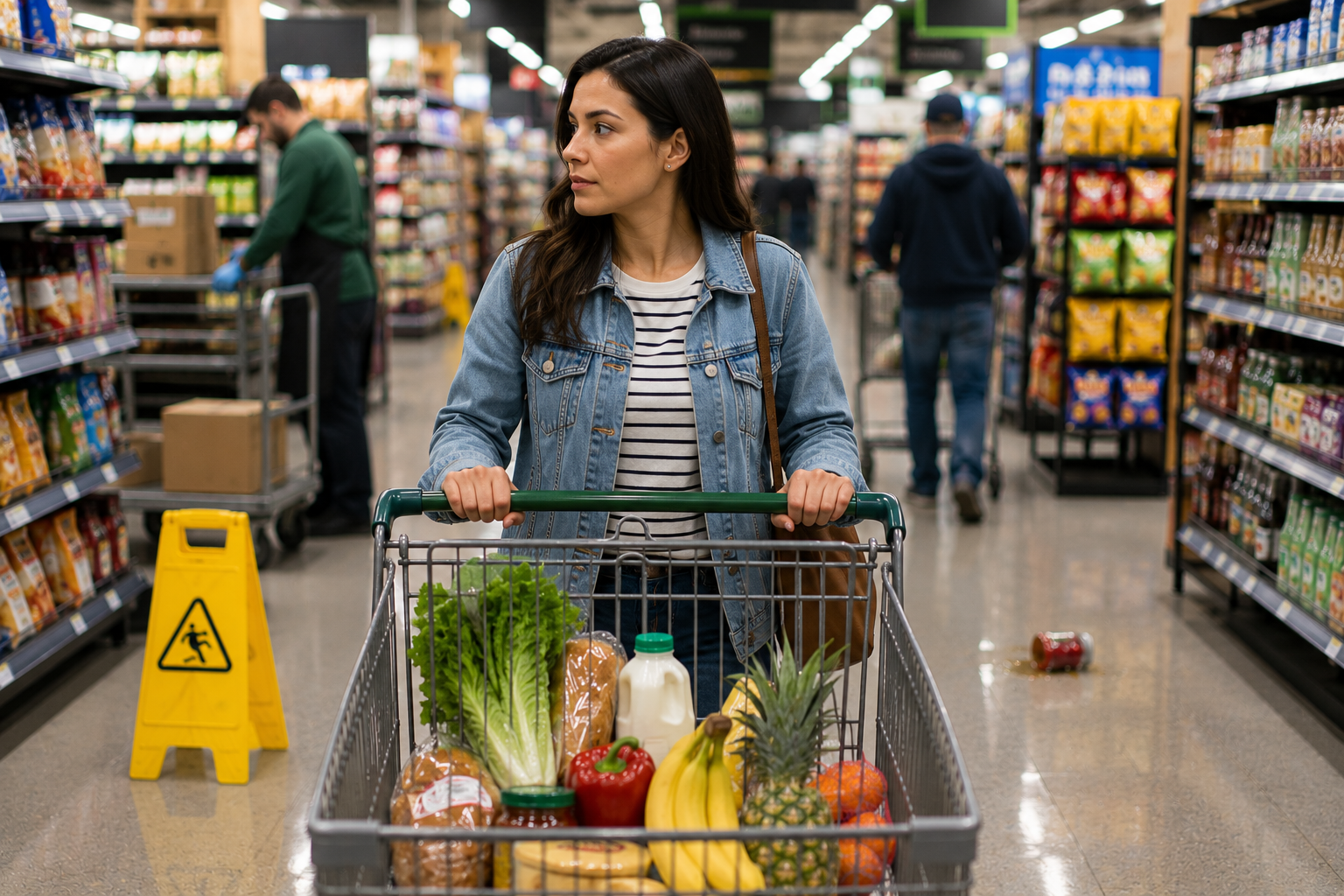
Why Produce Sections Can Be High-Risk Areas
Produce sections are among the most common areas where grocery store accidents may happen. Fruits and vegetables may fall to the floor, misting systems may leave moisture behind, and loose packaging may create slippery surfaces. Grapes, lettuce leaves, and spilled water are small hazards, but they may cause serious falls when stepped on unexpectedly.
Because shoppers often look at shelves instead of the floor, hazards in produce areas may be easy to miss. Bright lighting, busy displays, and crowded aisles may also distract shoppers from noticing wet or uneven surfaces.
Risks Near Refrigerated and Frozen Sections
Refrigerated and frozen sections may also create accident risks. Condensation, leaking freezers, melted ice, and damaged refrigeration units may leave puddles on the floor. In some stores, cold air from freezer cases may also make nearby flooring slick.
The Occupational Safety and Health Administration provides information about walking-working surface hazards, including risks involving wet, slippery, or cluttered floors. While OSHA focuses on workplace safety, many of the same principles apply to public walking areas.
Shopping Cart and Aisle Hazards
Shopping carts are useful, but they may also contribute to accidents. A cart with a broken wheel may suddenly pull to one side. A child climbing on a cart may cause it to tip. Shoppers may also trip over carts left in walkways or bump into others in crowded aisles.
Temporary product displays may create similar problems. Displays placed near aisle ends may reduce visibility and make it harder for shoppers to notice people turning corners. Heavy promotional items may also fall if they are stacked poorly.
Parking Lot Accident Risks
Many grocery store injuries occur before a shopper even enters the building. Parking lots often involve pedestrians, cars, delivery trucks, shopping carts, and uneven pavement. Poor lighting may increase risks at night, while rain may create slippery conditions.
Drivers may not always see pedestrians walking behind vehicles or between parked cars. Shoppers should stay alert when loading groceries, returning carts, and crossing parking lanes.
The National Safety Council provides safety resources related to injury prevention in everyday environments, including transportation and public safety concerns.
How Shoppers Can Reduce Accident Risks
Shoppers cannot control every hazard inside a grocery store, but they may reduce some risks by staying alert and moving carefully through the store.
Watch the Floor Ahead
Look for spills, fallen items, loose mats, or uneven flooring while walking. Avoid rushing through aisles, especially near produce, freezers, and entrances.
Use Caution Near Wet Floor Signs
Wet floor signs are warning tools, but they do not remove the hazard itself. Walk slowly and avoid stepping through visibly wet areas when possible.
Keep Hands Free When Possible
Carrying too many items may affect balance. Using a basket or cart may help reduce the chance of dropping items or losing control.
Be Careful Around Crowded Areas
Busy checkout lanes, deli counters, and sale displays may create distractions. Slowing down may help prevent collisions or falls.
Report Hazards
If you notice a spill, broken product, or blocked walkway, notify store staff. Reporting hazards may help prevent someone else from getting hurt.
What Store Owners Can Do to Improve Safety
Store owners and managers also play a major role in reducing accident risks. Regular inspections, prompt cleanup, safe stocking practices, and clear warning signs may help keep shoppers safer.
Good safety practices may include:
- Checking aisles regularly for spills and fallen products
- Cleaning wet areas promptly
- Using clear warning signs near hazards
- Maintaining flooring, mats, and entryways
- Training employees to respond quickly to reported hazards
- Keeping restocking carts and boxes away from walkways
- Inspecting parking lots for potholes and poor lighting
The U.S. Consumer Product Safety Commission offers public safety information related to consumer products and injury risks. Grocery stores may involve many products, fixtures, carts, and equipment that require proper maintenance and safe handling.
What To Do After a Grocery Store Accident
After a grocery store accident, the first priority is health and safety. A person who falls or is struck by an object should check for injuries and seek medical attention when needed. Some symptoms may not appear immediately, especially with head, neck, back, or soft tissue injuries.
It may also help to document what happened. If possible, take photos of the hazard, surrounding area, shoes, injuries, and any warning signs. Report the incident to store management and request that an incident report be created. If witnesses saw the accident, their contact information may also be useful.
As explained in The Hidden Costs of an Injury: What Most People Overlook, injuries may affect more than physical health. Medical bills, missed work, transportation issues, stress, and daily limitations may create additional challenges after an accident.
When Medical Evaluation May Be Needed
Some injuries are obvious right away, while others are not. A shopper should consider medical evaluation after a fall if they experience severe pain, swelling, difficulty walking, dizziness, confusion, numbness, tingling, or worsening symptoms.
The Mayo Clinic provides general first-aid guidance for sprains, which are common after slips, trips, and falls. Medical advice is especially important if pain does not improve or movement becomes limited.
Why Grocery Store Safety Awareness Matters
Grocery shopping is part of everyday life, so many people do not think about injury risks until an accident happens. However, busy aisles, wet floors, heavy products, and crowded parking lots may create hazards that deserve attention.
Safety awareness benefits everyone. Shoppers may move more carefully, employees may respond faster to hazards, and store managers may maintain safer conditions. These small steps may help reduce preventable injuries in a place people visit often.
Conclusion
Grocery store accidents may happen in aisles, produce sections, freezer areas, checkout lines, entrances, and parking lots. Wet floors, fallen products, cluttered walkways, unsafe displays, and poor maintenance may all contribute to injuries. While not every accident can be avoided, awareness and prevention may help reduce risks.
Shoppers should stay alert, watch for hazards, report unsafe conditions, and seek medical care after serious falls or impacts. Store owners should maintain clean, organized, and properly inspected spaces for customers and employees. By understanding these risks, everyday grocery trips may become safer for everyone.
For more injury prevention topics, visit our Blog section for additional safety articles and resources.