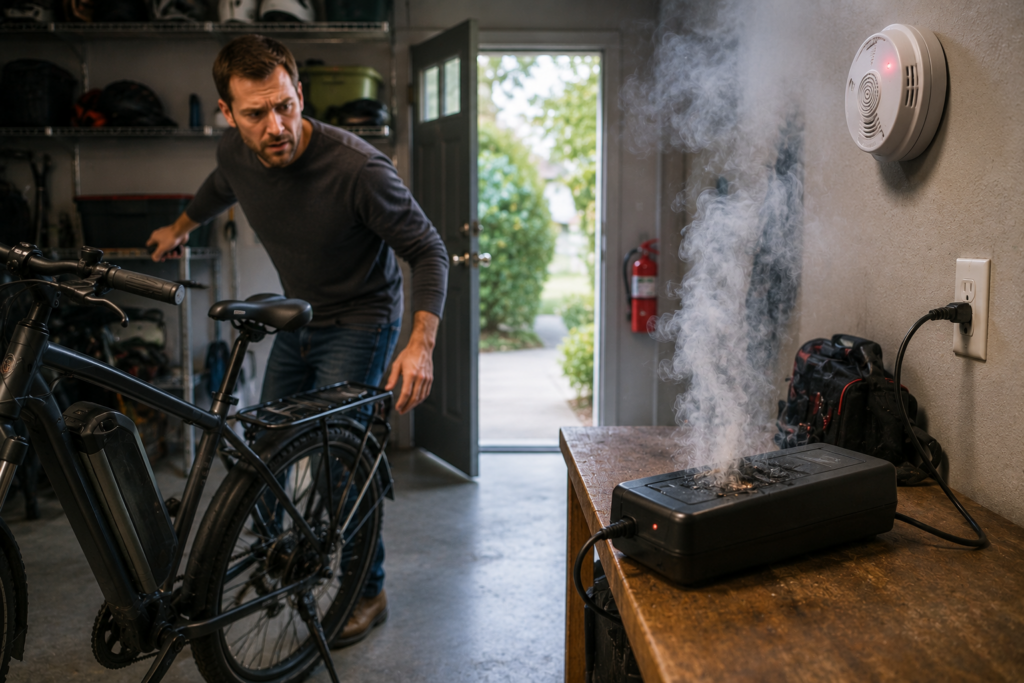
Lithium-ion batteries power many products used every day, including smartphones, laptops, tablets, power tools, electric bicycles, scooters, portable chargers, cameras, and household appliances. These batteries are lightweight, rechargeable, and capable of storing substantial energy in a relatively small space. Most operate safely when they are properly manufactured, maintained, charged, and stored. However, a damaged, defective, overheated, or incorrectly charged battery may create a serious fire risk.
Lithium-ion battery fires may develop quickly and produce intense heat, flames, smoke, and potentially hazardous gases. People nearby may suffer burns, smoke inhalation, eye irritation, falls during evacuation, or other injuries. A fire may also block an exit when a bicycle, scooter, or charging device is positioned in a hallway, doorway, or stairwell.
Battery fire safety is an increasingly important part of everyday injury prevention. Understanding why these batteries fail, recognizing warning signs, and following safe charging practices may help households reduce avoidable risks. This topic complements our broader guide to common injuries and how to protect yourself, which explains how awareness and preparation may reduce injury risks in daily life.
Why Lithium-Ion Batteries Can Catch Fire
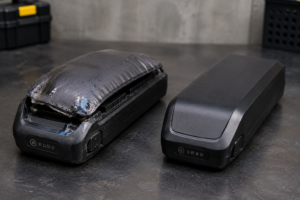 A lithium-ion battery contains cells that store and release electrical energy. These cells are designed with protective components that help keep the battery within a safe operating range. Problems may arise when a battery is physically damaged, exposed to extreme temperatures, manufactured incorrectly, charged with incompatible equipment, or altered by an unqualified person.
One major concern is a process known as thermal runaway. During thermal runaway, a battery cell generates heat faster than it can release it. The rising temperature may damage neighboring cells and create a chain reaction. This may result in smoke, fire, rapid pressure release, or an explosion-like event.
The U.S. Fire Administration’s battery fire safety guidance explains that lithium-ion batteries may present fire dangers when product instructions are not followed during use, charging, storage, or disposal. Consumers should treat every rechargeable battery as an energy-storage device rather than an ordinary household item.
Common factors that may contribute to battery failure include:
- Using a charger that was not designed or approved for the device
- Charging a battery that is swollen, cracked, leaking, or visibly damaged
- Leaving a device charging while everyone is asleep or away from home
- Exposing batteries to excessive heat, direct sunlight, or freezing conditions
- Dropping, crushing, puncturing, or modifying a battery pack
- Using replacement cells that have not been approved by the manufacturer
- Blocking ventilation around a battery or charging device
- Continuing to use a product after unusual heat, odors, sounds, or smoke appear
Which Household Products May Present a Battery Risk?
Lithium-ion batteries are found in a growing range of consumer products. Small devices generally contain less stored energy than large transportation or power-storage batteries, but any damaged rechargeable battery may require attention.
E-Bikes and Electric Scooters
E-bikes and electric scooters use larger battery packs that store enough energy to power a motor. These devices should be charged only with equipment recommended by the manufacturer. Batteries should not be rebuilt, modified, or fitted with unapproved cells.
The U.S. Consumer Product Safety Commission’s micromobility safety center advises consumers to remain present while charging micromobility products and not to charge them while sleeping or away from home.
Phones, Tablets, and Laptops
Portable electronics contain compact batteries that may be damaged by heat, pressure, impact, or incompatible charging accessories. A laptop battery that begins lifting the keyboard or separating the device casing may be swollen and should not continue to be used or charged.
Power Tools and Lawn Equipment
Cordless drills, saws, leaf blowers, lawn equipment, and similar products may use removable battery packs. These batteries should be stored away from metal objects that could contact the terminals and should not be left in extremely hot vehicles or outdoor storage areas.
Portable Chargers and Battery Banks
Battery banks may be carried in bags, pockets, vehicles, or luggage. Crushing, puncturing, overheating, or using a poorly matched cable or charger may increase the chance of failure.
Warning Signs of a Failing Battery
A battery may provide warning signs before it fails. Recognizing these signs may allow a person to stop using the device and move away before conditions become more dangerous.
Potential warning signs include:
- Unusual heat during use or charging
- Swelling, bulging, or distortion
- Cracks, punctures, dents, or leaking material
- A sharp, chemical, metallic, or unusual odor
- Hissing, popping, crackling, or bubbling sounds
- Smoke, vapor, sparks, or discoloration
- A battery that will not hold a charge or charges unpredictably
- A device casing that begins separating or changing shape
Do not continue charging a battery that shows these warning signs. Avoid touching a smoking, leaking, or extremely hot battery. Move away from the area and contact emergency services when there is smoke, fire, rapid heating, or an immediate threat.
Injuries Associated With Lithium-Ion Battery Fires
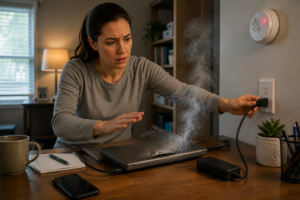 Battery incidents may cause several types of injuries. The severity depends on the size of the battery, the person’s distance from the device, the amount of smoke produced, and whether the event occurs in an enclosed space.
Thermal Burns
Direct contact with flames, hot surfaces, or heated battery materials may damage the skin. Burns may range from superficial redness to deep tissue injuries requiring hospital treatment.
Smoke Inhalation
Smoke may irritate the nose, throat, and lungs. A person exposed in a bedroom, garage, apartment hallway, elevator, or other enclosed area may experience coughing, shortness of breath, headache, chest discomfort, dizziness, or confusion.
Eye and Facial Injuries
Heat, smoke, sparks, fragments, or battery material may injure the eyes and face. Immediate medical attention may be necessary when a person experiences eye pain, vision changes, facial burns, or chemical exposure.
Falls and Evacuation Injuries
People attempting to escape a rapidly developing fire may trip, fall, or collide with objects. Batteries and charging devices placed in hallways or near doors may create additional evacuation obstacles.
Emotional and Financial Effects
A serious fire may result in temporary displacement, property damage, medical costs, missed work, and emotional distress. Our article about the hidden costs of an injury discusses how an accident may affect far more than a person’s immediate medical expenses.
How to Charge Lithium-Ion Batteries Safely
Safe charging begins with the correct equipment and an appropriate location. Consumers should read the manufacturer’s instructions and use only the charger supplied with the product or specifically recommended for it.
Charge While You Are Awake and Present
A device should not be left charging overnight, while everyone is asleep, or while the home is empty. Being present may allow someone to notice overheating, smoke, unusual odors, or other warning signs sooner.
Use a Clear, Hard Surface
Charge devices on a stable, nonflammable surface rather than on a bed, couch, carpet, pillow, or pile of clothing. Keep chargers and batteries away from paper, curtains, upholstered furniture, and other combustible materials.
Keep Exits Clear
Do not charge or store e-bikes, scooters, or large batteries in doorways, hallways, stairwells, or other escape routes. Every household member should have an unobstructed path to an exit.
Disconnect the Device When Charging Is Complete
Follow the manufacturer’s charging instructions and unplug the product when charging is finished. Avoid connecting multiple high-powered chargers to an overloaded extension cord or damaged outlet.
How to Store Batteries More Safely
Batteries should be stored in a cool, dry location away from direct sunlight, heaters, open flames, and moisture. They should not be placed where children or pets can puncture, chew, drop, or otherwise damage them.
Loose batteries should be protected from contact with coins, keys, tools, and other metal objects. Metal touching exposed terminals may create a short circuit and generate heat.
Never store a battery that is swollen, leaking, smoking, or extremely hot inside a living space. Contact the manufacturer, local fire department, or hazardous-waste authority for guidance on safe handling. Do not place a damaged lithium-ion battery in an ordinary household trash or recycling container.
Safe Battery Disposal and Recycling
Lithium-ion batteries require special disposal because they may be crushed or punctured during ordinary waste handling. A damaged battery may start a fire inside a collection truck, recycling facility, or waste-processing location.
The U.S. Environmental Protection Agency’s lithium-ion battery recycling guidance explains how consumers can manage used batteries and locate appropriate recycling options. Contact the recycling center before transporting a swollen, recalled, or damaged battery because not every collection site accepts hazardous batteries.
Consumers should also check the CPSC recall database for safety notices involving batteries, chargers, e-bikes, scooters, power tools, and other rechargeable products.
What to Do When a Battery Begins Smoking or Burning
Do not attempt to pick up, carry, or personally extinguish a battery that is smoking, sparking, or burning. A failing cell may release intense heat and ignite additional cells without warning.
Leave the area immediately, close doors behind you when it is safe to do so, and call emergency services from outside. Warn others and do not return to retrieve property. Smoke may spread quickly, and a battery may reignite even after visible flames appear to stop.
The Ready.gov home fire guide recommends having an evacuation plan, practicing escape routes, and remaining outside after leaving a fire until authorities say it is safe to return.
What to Do After a Burn or Smoke Exposure
Call emergency services immediately for serious burns, breathing problems, confusion, loss of consciousness, facial burns, significant smoke inhalation, or injuries involving a large area of the body.
For a minor thermal burn, move away from the heat source and cool the affected area with cool running water. Do not apply ice directly to the skin, and do not break blisters. Cover the area loosely with a clean, dry dressing and seek medical advice when pain is severe, symptoms worsen, or the burn involves the face, hands, feet, eyes, joints, or airway.
A medical evaluation may be necessary even when a person initially feels well after breathing smoke. Respiratory symptoms may develop or worsen after the exposure.
Creating a Household Battery Safety Plan
Battery safety should be part of a broader household fire plan. Install working smoke alarms, test them regularly, identify at least two escape routes when possible, and make sure everyone knows where to meet outside.
Households should also create simple rules for rechargeable products:
- Use only compatible batteries and chargers
- Do not charge devices unattended or overnight
- Keep charging areas away from exits and combustible items
- Inspect batteries regularly for swelling or damage
- Stop using products that become unusually hot
- Check for product recalls
- Recycle batteries through approved collection programs
- Teach children not to handle damaged batteries
These habits support the same prevention-first approach discussed in Why Slip and Fall Accidents Are More Serious Than You Think. Although the hazards differ, early recognition and prompt action are important in preventing both types of injuries.
Conclusion
Lithium-ion batteries make modern devices more convenient, but they should be charged, stored, and discarded carefully. Using approved equipment, staying present while devices charge, watching for warning signs, keeping escape routes clear, and recycling batteries properly may reduce the chance of a serious incident.
When a battery begins smoking, sparking, swelling, or overheating, personal safety should come first. Stop using the device, avoid touching a dangerous battery, leave the area when necessary, and contact emergency services. Battery fires may progress rapidly, making preparation and early action especially important.
For more practical safety and injury-prevention information, visit the Injury Insider blog and explore our latest articles.