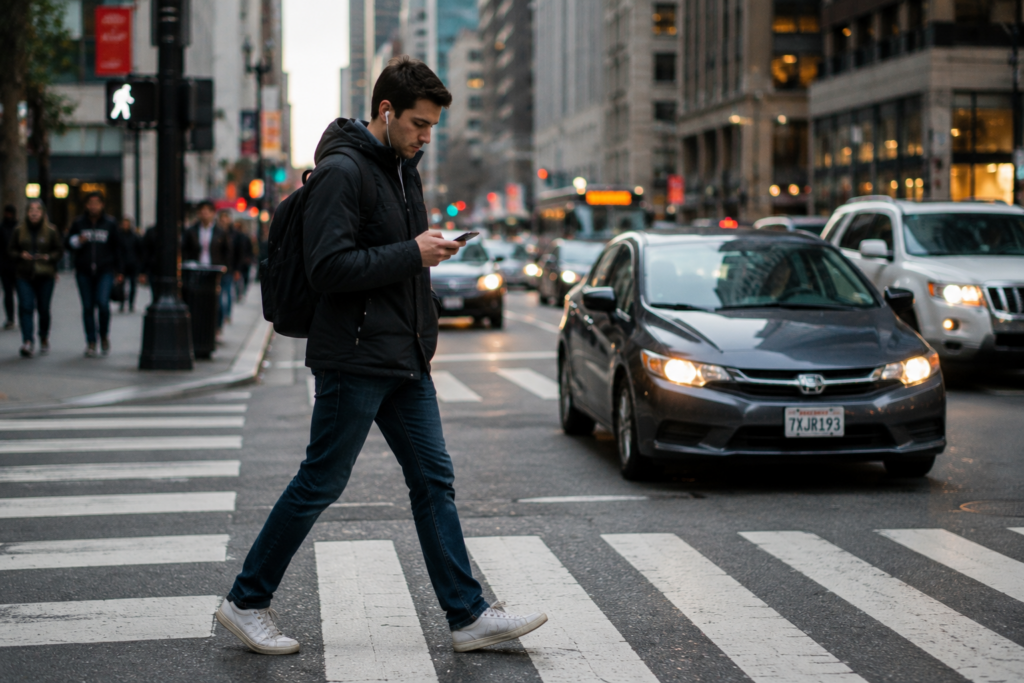
Distracted driving often receives national attention, but distracted walking has also become a growing safety concern. Smartphones, headphones, smartwatches, navigation apps, and social media notifications may pull a pedestrian’s attention away from their surroundings in seconds. Even brief distractions may increase the risk of collisions, falls, trips, or stepping into dangerous traffic situations.
Many people use their phones while walking through parking lots, intersections, sidewalks, transit stations, and crowded public spaces. While multitasking may seem harmless, distracted walking accidents may lead to serious injuries involving vehicles, bicycles, scooters, uneven pavement, or other hazards. As cities become busier and mobile device use continues increasing, pedestrian awareness has become more important than ever.
Some injury risks connected to distracted walking overlap with concerns discussed in Top 7 Most Common Injuries and How to Protect Yourself, especially fractures, sprains, head injuries, and soft tissue damage that may happen during sudden impacts or falls.
Why Distracted Walking Accidents Are Increasing
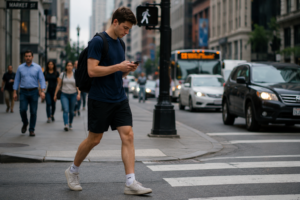 Mobile devices have changed the way people move through public spaces. Texting, checking directions, listening to music, scrolling social media, or answering calls while walking may reduce awareness of traffic signals, obstacles, and approaching vehicles.
According to the Centers for Disease Control and Prevention, thousands of pedestrians are injured in traffic-related incidents every year. While distracted walking is not the only contributing factor, reduced attention may increase the likelihood of dangerous situations.
Several factors may contribute to distracted walking accidents:
- Texting or reading messages while crossing streets
- Using GPS navigation without watching surroundings
- Wearing noise-canceling headphones near traffic
- Looking down at phones instead of sidewalks
- Rushing through intersections while distracted
- Walking in crowded areas without paying attention
These distractions may prevent pedestrians from reacting quickly to changing traffic conditions or environmental hazards.
Common Places Where Distracted Walking Accidents Happen
Distracted walking accidents may happen almost anywhere, but some environments create higher risks than others.
Intersections And Crosswalks
Pedestrians focused on phones may miss traffic signals, turning vehicles, or bicycles approaching intersections.
Parking Lots
Drivers backing out of parking spaces may not see distracted pedestrians walking behind vehicles.
Public Transit Areas
Bus stops, train platforms, and subway stations may become dangerous when pedestrians are distracted near moving vehicles or crowded walkways.
Uneven Sidewalks
Cracked pavement, curbs, potholes, and construction zones may increase fall risks for pedestrians who are not paying attention.
Many fall-related incidents are similar to the hazards discussed in Why Slip and Fall Accidents Are More Serious Than You Think, where unexpected obstacles may lead to significant injuries.
Common Injuries in Distracted Walking Accidents
The severity of distracted walking injuries may vary depending on the situation. Some accidents involve minor bruises, while others may result in serious trauma.
Head Injuries
Falls or collisions with vehicles may lead to concussions or traumatic brain injuries. Even seemingly minor impacts may require medical evaluation.
Fractures
Pedestrians who trip or fall often instinctively extend their arms to break the fall, which may result in wrist, arm, or shoulder fractures.
Sprains And Soft Tissue Injuries
Ankle sprains, knee injuries, and muscle strains are common when pedestrians stumble over obstacles or step awkwardly.
Cuts And Abrasions
Falls on pavement may cause road rash, cuts, and bruising that require treatment and recovery time.
Several of these injuries also appear in Car Accident Injuries Explained: From Whiplash to Broken Bones, especially when pedestrian accidents involve moving vehicles.
How Smartphones Affect Pedestrian Awareness
Research has shown that smartphone use may affect balance, reaction time, and spatial awareness while walking. Looking down at a screen reduces a pedestrian’s ability to notice environmental hazards or judge traffic speed accurately.
The National Highway Traffic Safety Administration explains that pedestrian safety depends heavily on awareness, visibility, and attention in traffic environments.
Headphones may also reduce awareness of warning sounds such as horns, sirens, or approaching bicycles. Combining visual and auditory distractions may significantly increase accident risks.
How To Reduce Distracted Walking Risks
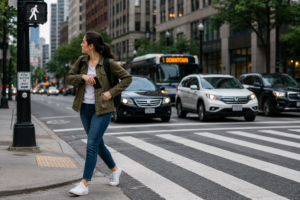 Although distractions are common in daily life, several simple habits may help reduce accident risks while walking.
Put Phones Away While Crossing Streets
Pedestrians should avoid texting, scrolling, or watching videos while crossing intersections or navigating busy areas.
Use Crosswalks And Follow Signals
Crosswalks and pedestrian signals may help improve visibility and organize traffic movement more safely.
Stay Alert Around Vehicles
Drivers may not always see pedestrians immediately, especially in parking lots or low-visibility conditions.
Lower Headphone Volume
Keeping headphone volume lower may help pedestrians remain aware of surrounding traffic and warning sounds.
Watch Walking Surfaces
Paying attention to sidewalks, curbs, stairs, and uneven pavement may help reduce trip-and-fall accidents.
The Occupational Safety and Health Administration also provides information regarding walking surfaces and fall prevention hazards.
Distracted Walking and Young Pedestrians
Teenagers and young adults are among the most frequent smartphone users, which may increase distracted walking risks in these age groups. Students walking near schools, campuses, parking areas, or public transportation while using phones may face higher accident exposure.
Parents and schools may help encourage safer habits by discussing pedestrian awareness, limiting distractions near traffic, and reinforcing safe crossing practices.
Nighttime Distracted Walking Risks
Distracted walking may become even more dangerous at night or during poor weather conditions. Reduced visibility combined with phone distractions may make it harder for pedestrians to notice hazards or for drivers to see pedestrians clearly.
The U.S. Department of Transportation recommends wearing reflective clothing and staying visible in low-light environments to help improve pedestrian safety.
What To Do After a Distracted Walking Accident
If a pedestrian is injured in an accident, seeking medical attention is important even if symptoms appear minor initially. Some injuries, especially head trauma or internal injuries, may not show symptoms immediately.
It may also help to:
- Document the accident scene
- Take photographs if possible
- Report dangerous conditions or collisions
- Gather witness information
- Monitor symptoms carefully after the incident
As discussed in The Hidden Costs of an Injury: What Most People Overlook, injuries may affect more than physical health and may impact finances, work responsibilities, and emotional well-being.
Conclusion
Distracted walking accidents may happen quickly, especially when attention shifts away from traffic, sidewalks, or surrounding hazards. Smartphones and headphones have become part of daily life, but staying alert while walking remains important for pedestrian safety. Small habits like putting away phones near intersections, watching walking surfaces, and staying aware of surroundings may help reduce accident risks significantly.
For more injury prevention and pedestrian safety articles, visit our Blog section for additional resources and updates.